Overview · Saks Fifth Avenue JP
A multi-page checkout that lost shoppers at every step.
The Head of Global Payments wanted the existing checkout flow — split across multiple page loads — collapsed into a single-page experience. Fewer reloads, less re-entry, more conversions.
Feature Objective
More accounts, more favorites, more conversions.
The revamp had three goals: drive account creation at checkout, make it easy for shoppers to save cart items to their favorites, and convert those saved items into future purchases — all while creating a smoother shopping experience end to end.
Feature Target
Generic enough for every client, sharp enough for JP & KR.
Although Saks serves Japan and Korea, the payment gateway is shared across clients — so the redesign needed to stay generic and reusable. That said, stakeholders had Kakao Pay and Line Pay on the roadmap for quick-checkout integration down the line.
Current User Flow
Four pages to buy one thing.
The checkout was split across multiple page loads — cart, shipping, payment, review. On mobile, where mis-taps are common, every page reload meant re-entering information. Related components like shipping options were scattered: one part at the top of the page, the other at the bottom.
Start
Cart
Review items
page reload
Shipping
Enter address
page reload
Payment
Enter card details
page reload
Review
Confirm order
Done
Each reload = risk of data loss, especially on mobile
Desired User Flow
One page, collapsible stages, no reloads.
Even if a shopper doesn’t complete the purchase, the flow should still capture value — either an account signup for future newsletters, or items saved to favorites. Research from country managers confirmed that Japanese and Korean shoppers heavily use the favorites basket and often return to buy later.
Start
Single-page checkout
Collapsible stages, no reloads
Completes purchase
Account creation prompt
Converts
+ new account
Saves to favorites
Add from cart to wishlist
Retained
Returns to buy later
Edits in-place
Size, color, add from favorites
Upsell
Larger basket value
Every exit path captures value — purchase, account, or favorites
Problem Identification
Three problems hiding in one checkout.
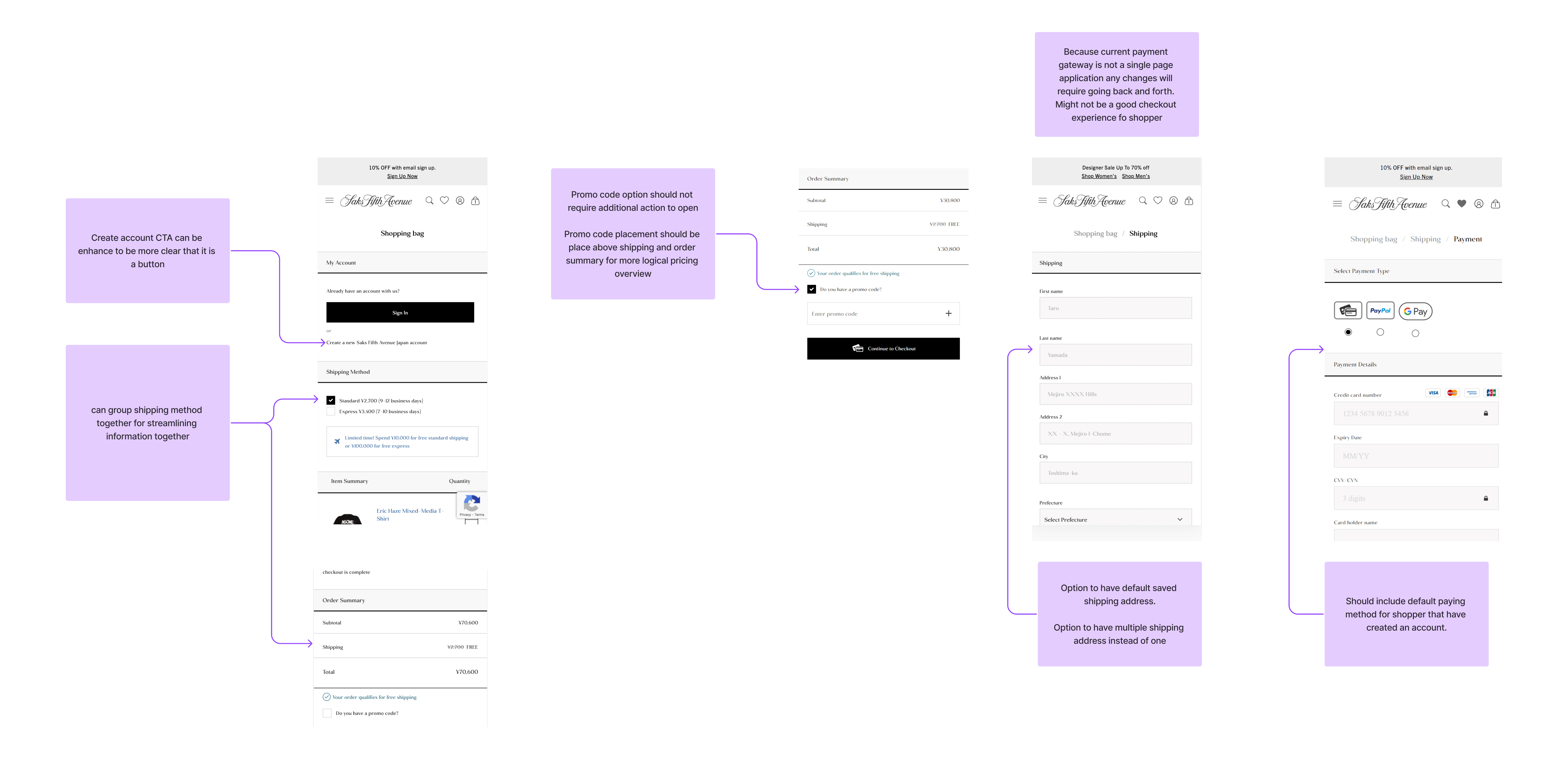
Cluttered stage display
Repetitive UI copy for stages like “Shipping,” unclear messaging, and a create-account button that was easy to miss. Smaller screens made it worse — not enough visual breathing room.
Divided related items
Shipping method selection was split — one part at the top, the other at the bottom. The review step also let shoppers re-select their shipping method, risking accidental last-minute changes.
Lack of empathy
The cart had the basics — remove and adjust quantity — but no way to save to favorites or edit size and color. During sales, when items sell out fast, those last-minute tweaks matter.
Market Research
JP & KR shoppers treat favorites like a second cart.
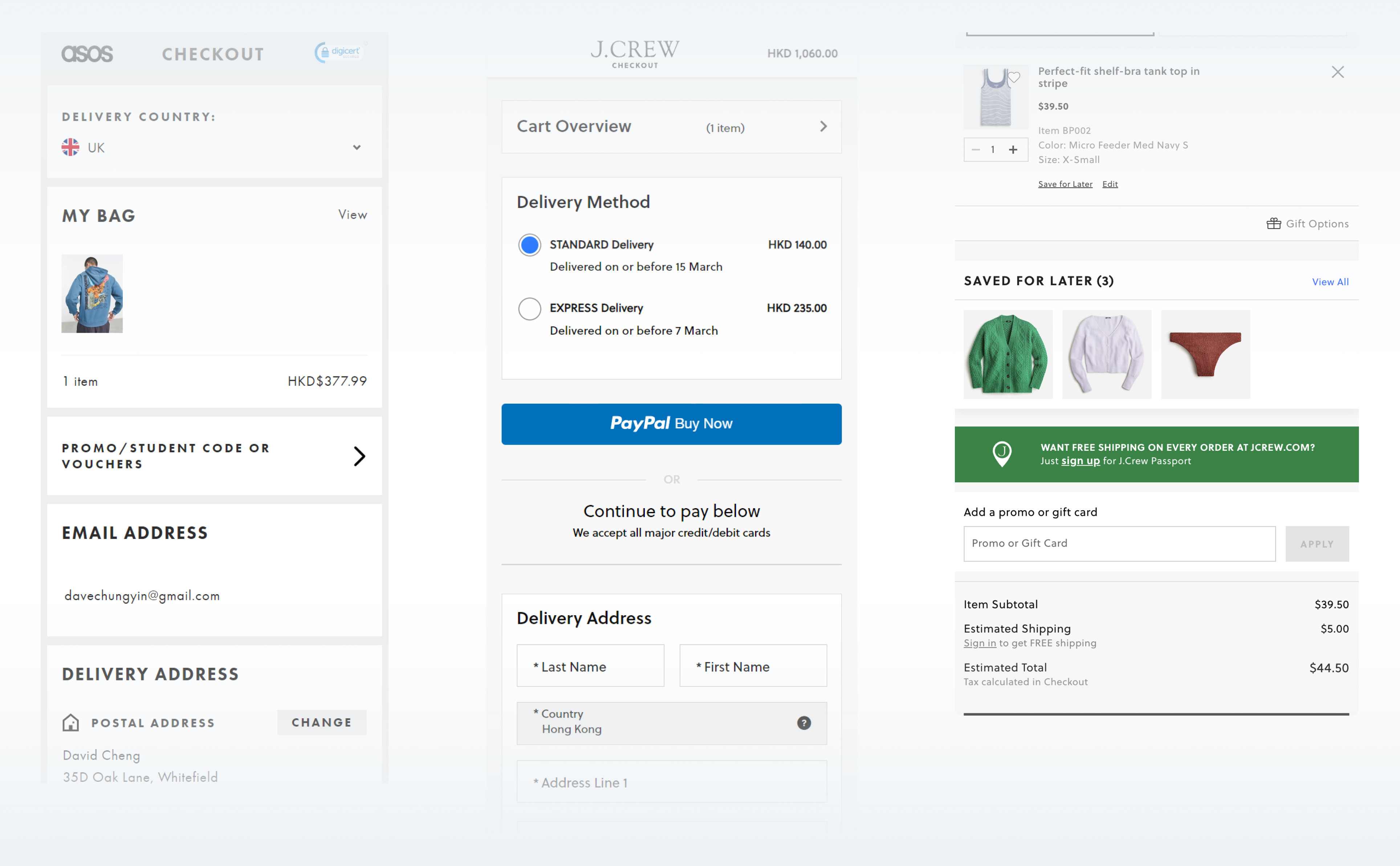
Country managers confirmed that Japanese and Korean shoppers routinely move items to favorites for later consideration — adjusting size, comparing colors, waiting for the right moment. A checkout that ignores that behaviour leaves value on the table.
Clear stage indicators
Brands like J.Crew and ASOS use single-page checkouts with visible progress indicators — shoppers always know where they are in the journey.
Wishlist + collapsible sections
Adding a “save to wishlist” option and inline edit controls at checkout lets shoppers make last-minute changes without leaving the page. Collapsible sections keep the flow navigable.
Hypothesis
A single-page checkout reduces the frustration of re-entering information and gives shoppers a clearer picture of where they are in the process.
JP and KR shoppers already use favorites as part of their buying journey — surfacing it at checkout meets them where they are.
Letting shoppers edit cart items and pull from their favorites list at checkout can generate additional sales without adding friction.
Design & Solution
Two iterations — speed first, then depth.
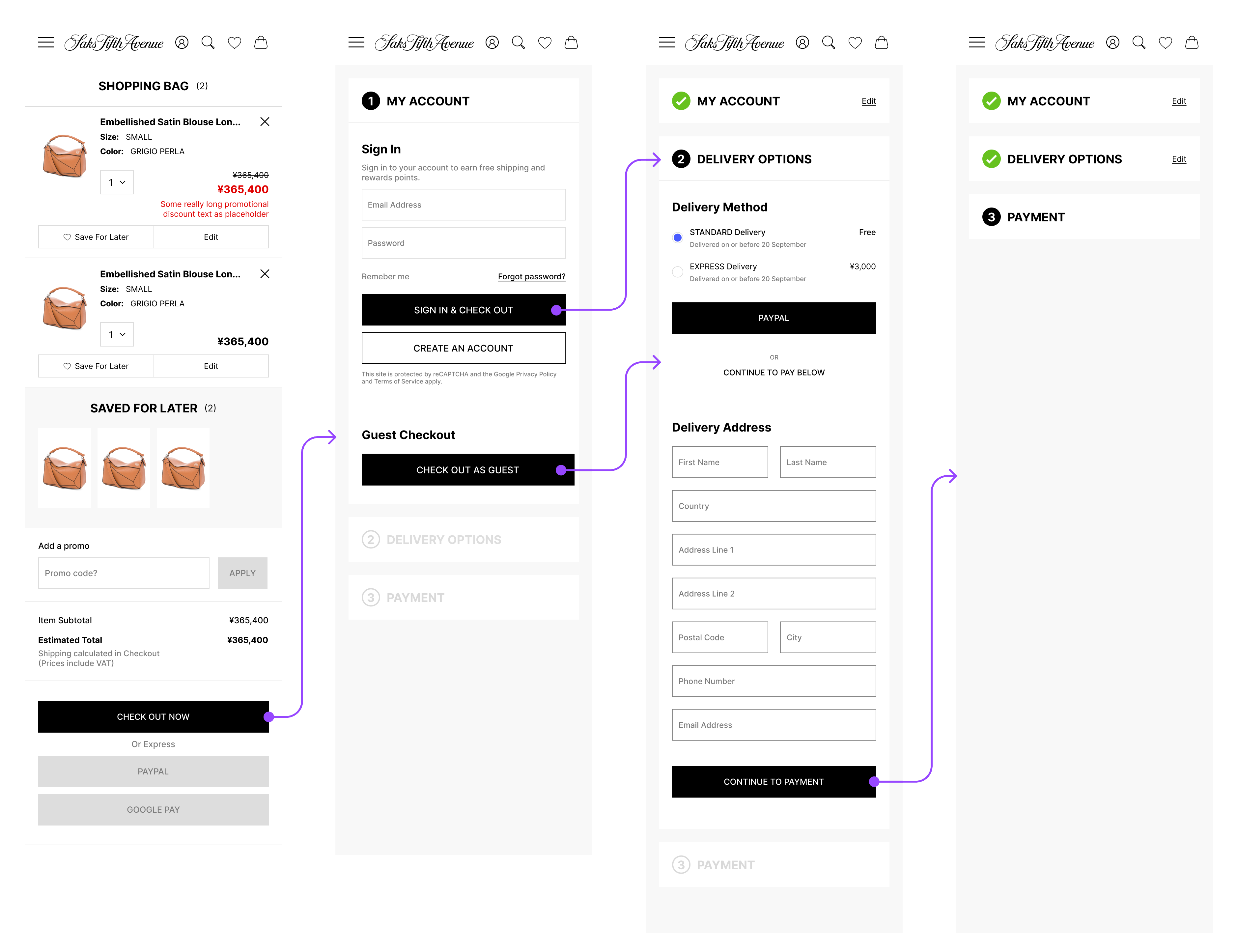
1st Iteration
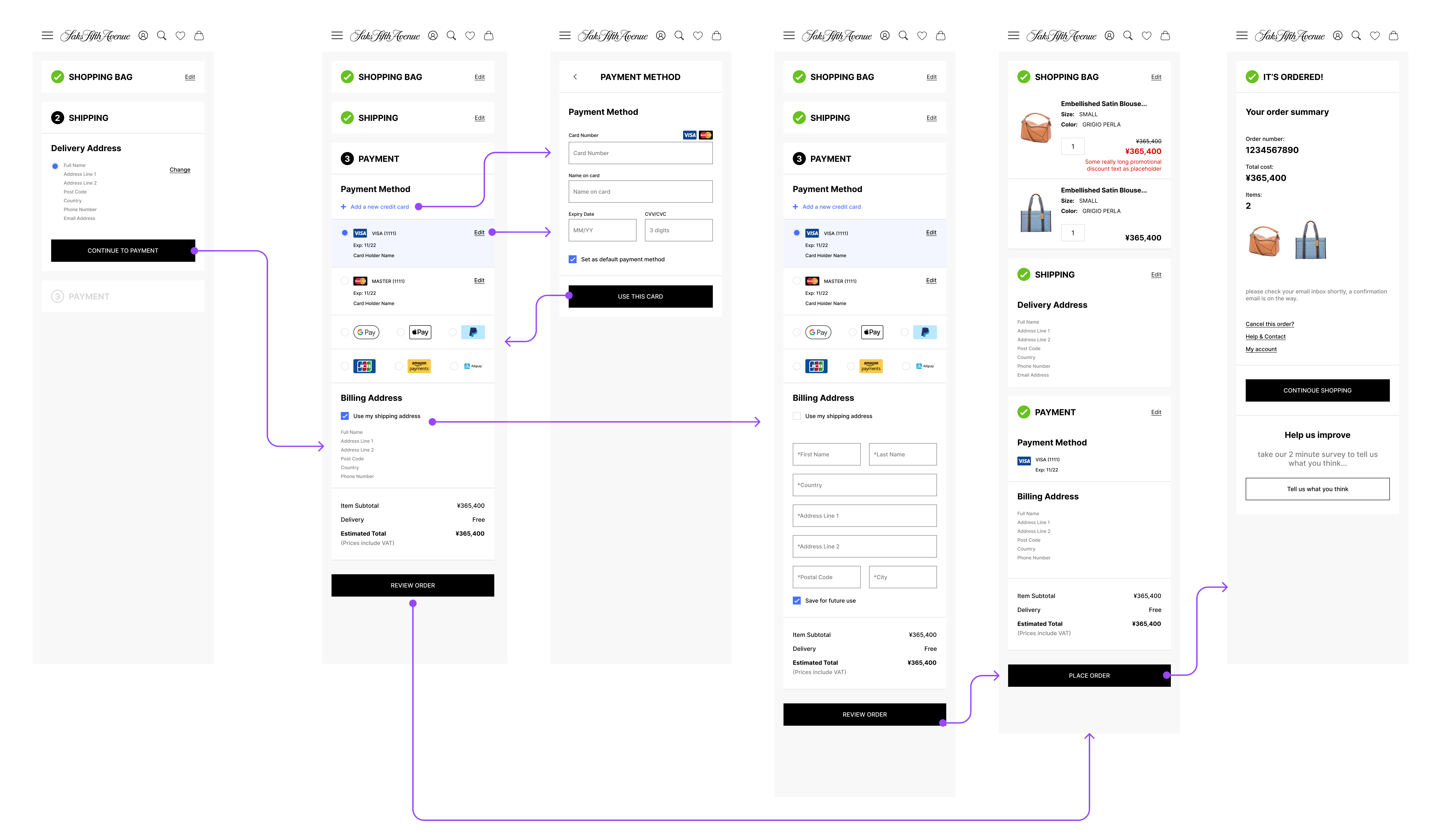
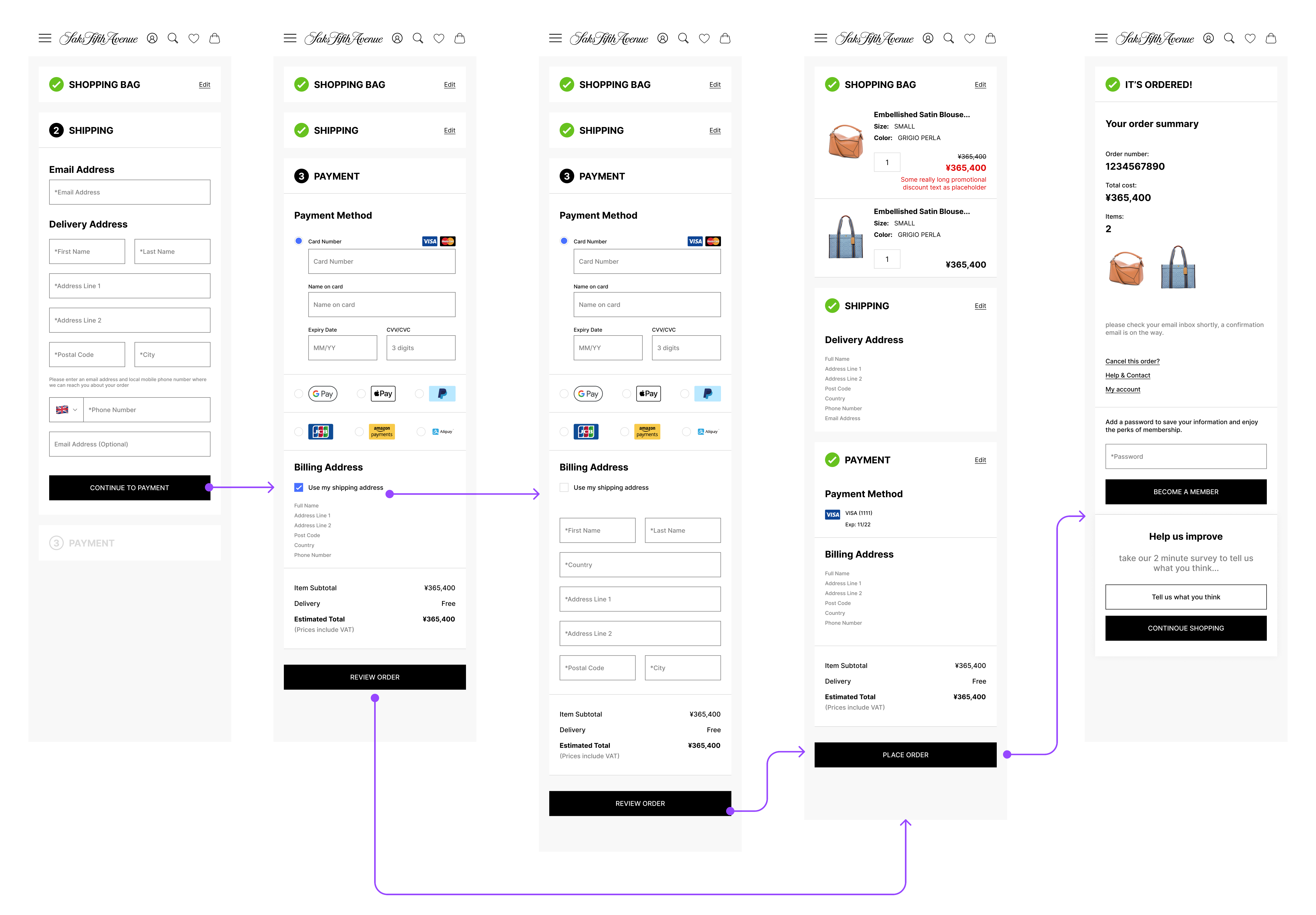
Stakeholders wanted changes shipped before code freeze, so we skipped low-fidelity wireframes and went straight to high-fidelity direction. The first round focused on structure: moving delivery options into the shopping bag stage for quick checkout, adding a mandatory opt-in for saving delivery addresses, and requiring an email before guest checkout could proceed.
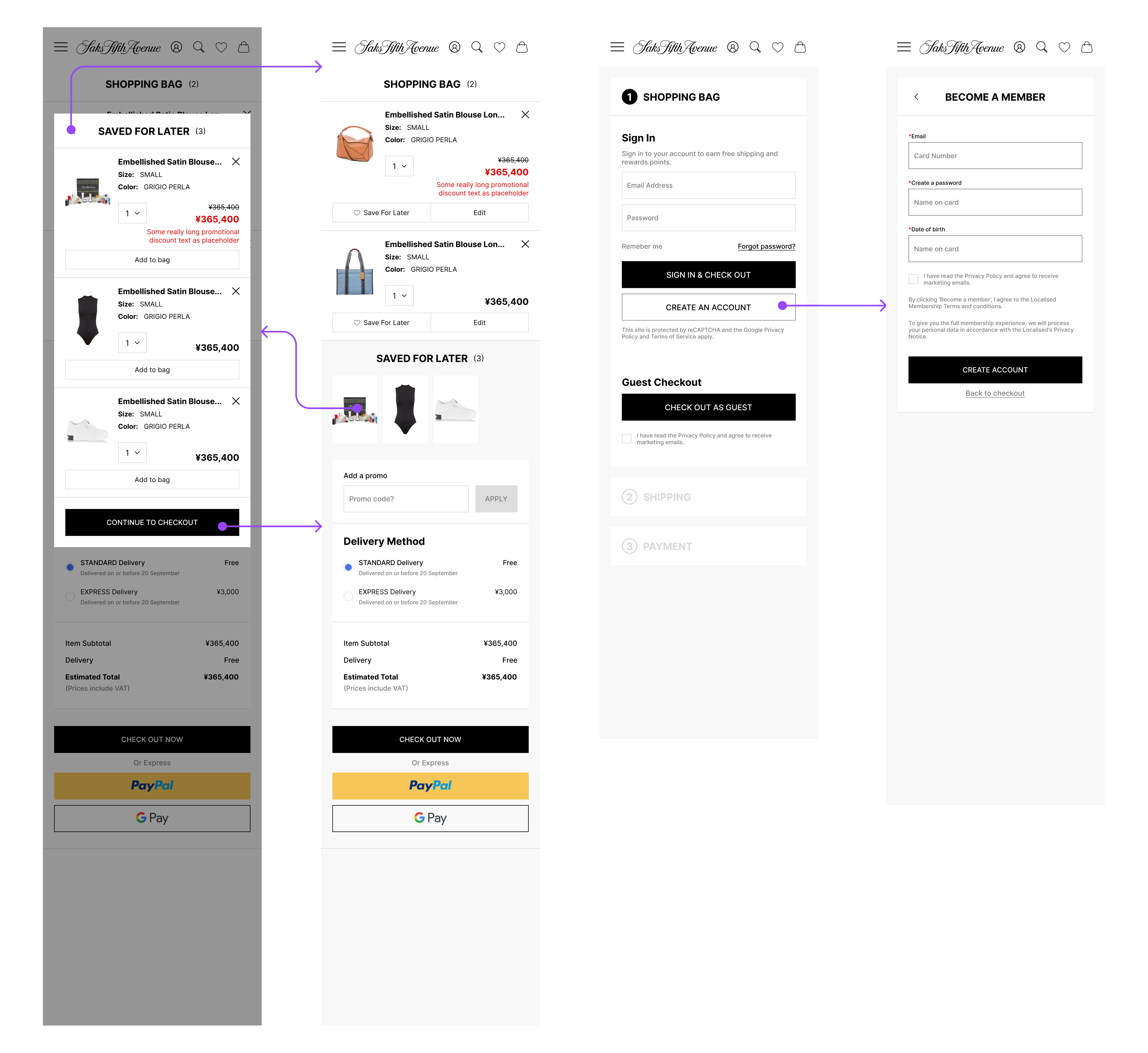
2nd Iteration
The second pass added depth: cart cards gained an “add to favorites” option and inline editing for color, size, and other attributes. A favorites drawer let shoppers pull items from their existing wishlist straight into the cart without leaving the page. The account creation CTA was redesigned to be more prominent, with a secondary prompt after order completion for quick signup.