Overview
A LoRA-Trained Pipeline for FWD’s New Illustration Style
After our group revamped the illustration style, the new direction looked great but took significantly longer to produce — and requests piled up faster than the team could deliver. I built a LoRA-trained AI pipeline to bridge the gap: same style, same quality, a fraction of the manual work.
Problem Identification
A more intricate illustration style meant longer production times just as request volume was climbing — the team couldn’t keep up.
Defining Success
Match the new style’s quality at a fraction of the turnaround, freeing designer time for higher-value, business-driven work.
Current Process
A LoRA-Trained Pipeline for FWD’s New Illustration Style
The manual process also made adoption difficult. Without a scalable way to produce on-style assets, markets defaulted to whatever was available — resulting in inconsistent brand visuals across the region.
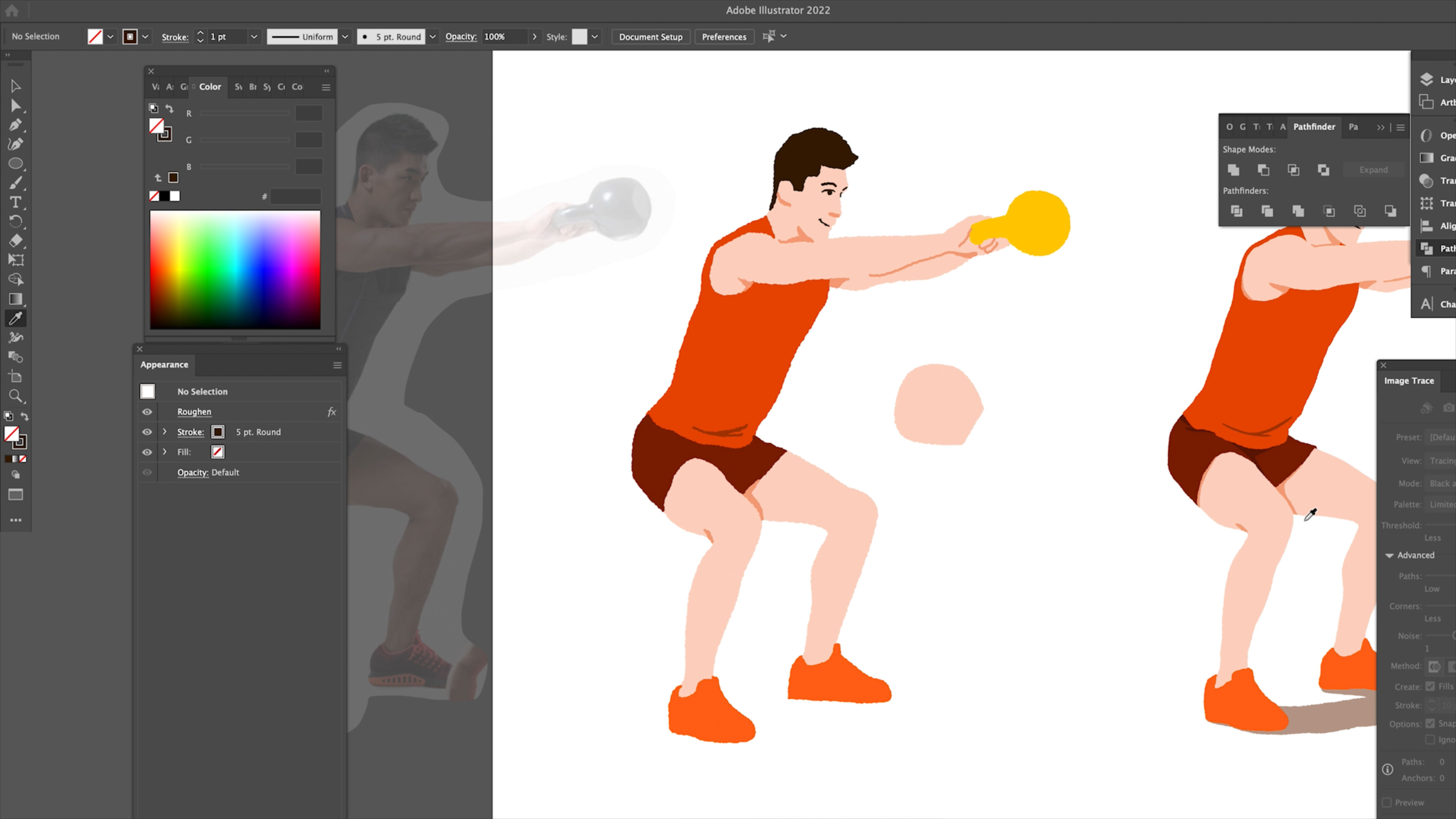
Current Process
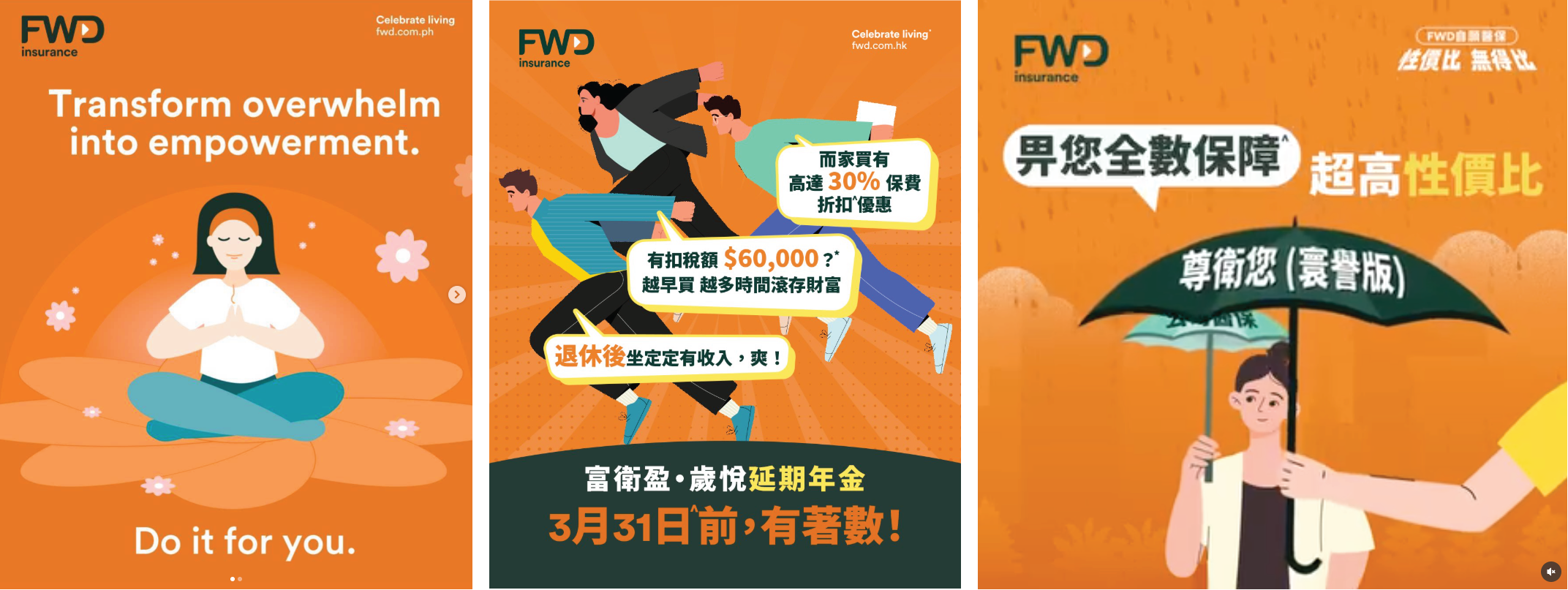
Social Media
Lora Training
From Playbooks to LoRA: Teaching the Model the Style Directly
Training sessions and market playbooks helped, but they weren’t enough — consistency still depended too heavily on individual interpretation. So I turned to LoRA training: the idea was to encode the style directly into the model, getting designers 70–80% of the way there with a generated asset they could then refine in Illustrator. Less guesswork, more time spent on the work that actually needs a human eye.

0 weight

500 weight

4750 weight
The grid above shows the model’s progression across training steps — from 0 to 4,750 weights — tested against the same prompts at each stage.
Result
From “Close Enough to Ship — With Room to Refine
Output quality landed close to hand-crafted illustrations, with only minor color and anatomy tweaks required before finalising.

Manual Illustration

Lora Generation
To pressure-test the results, I ran the same prompts across three conditions: base model, base model with an illustration reference, and the LoRA. The LoRA consistently produced outputs closest to the target style — with more dynamic compositions — though outputs occasionally echoed assets from the training set. That’s an expected limitation of a focused dataset, and one that improves with broader illustration coverage.
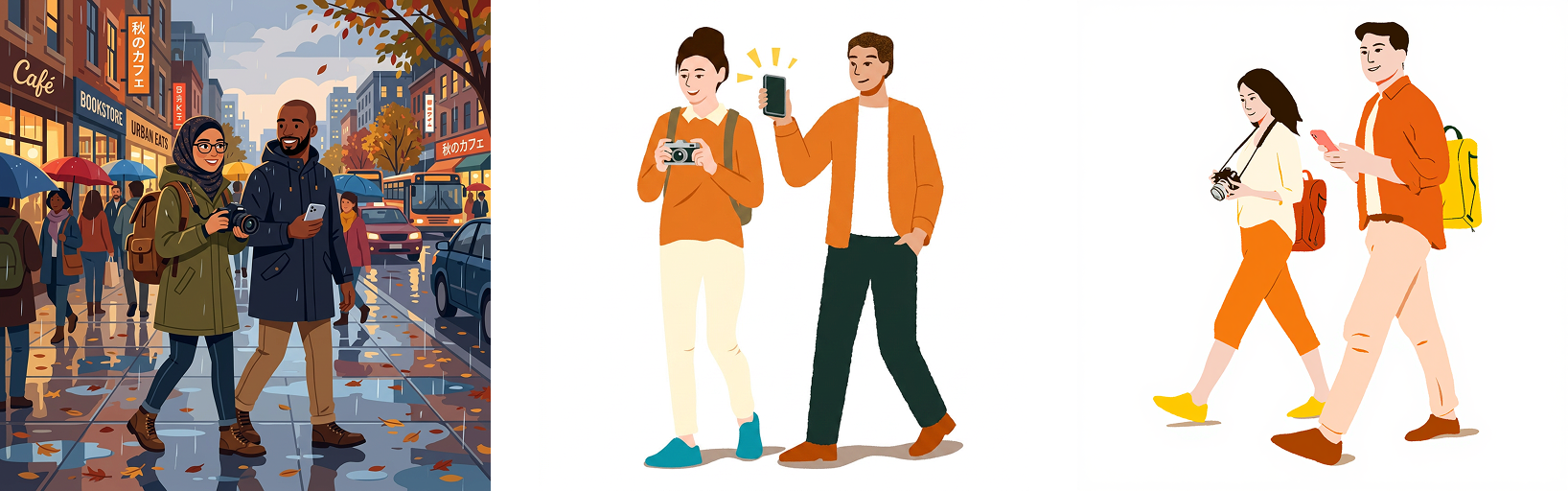
a woman and a man walking side by side. one is holding an camera in her hands and the other an iphone. the woman is wearing a backpack.

a man and a woman colleague having a conversation while standing over whats being show on an iPad held by the man colleague
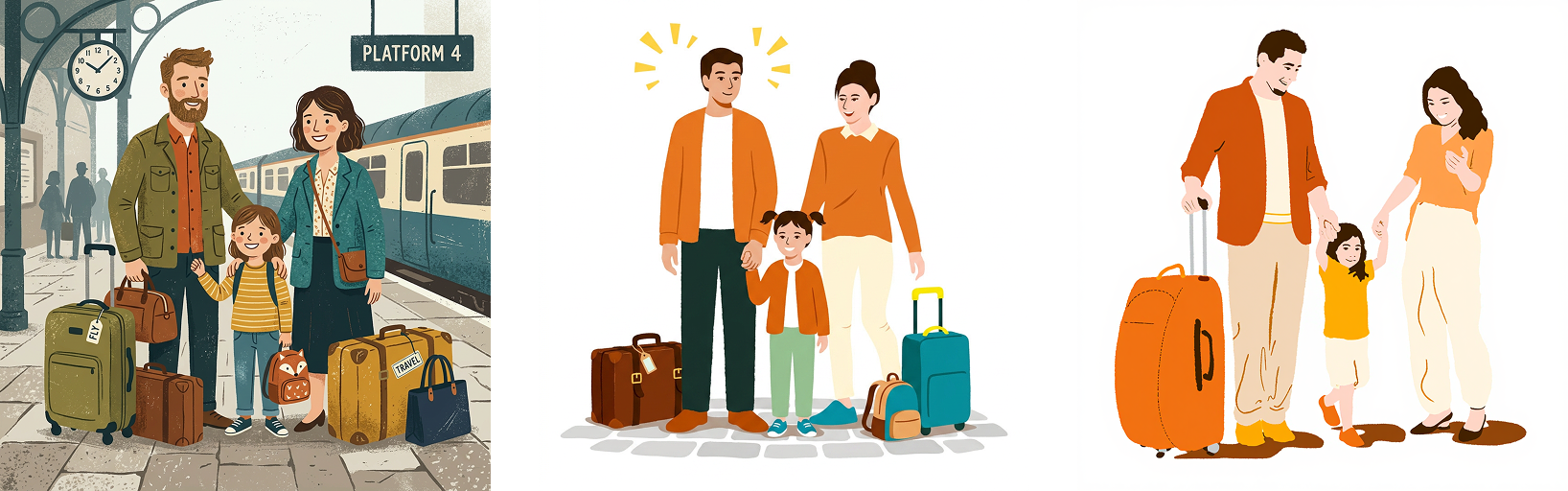
a family of three standing with their luggage next to them

a young boy walking a golden retriver on a leash. the dog turn around and look at the boy